
Your Swing Isn’t the Problem. Your Hips Might Be
What Is a TPI Golf Screening, and Do Northern Virginia Golfers Actually Need One?
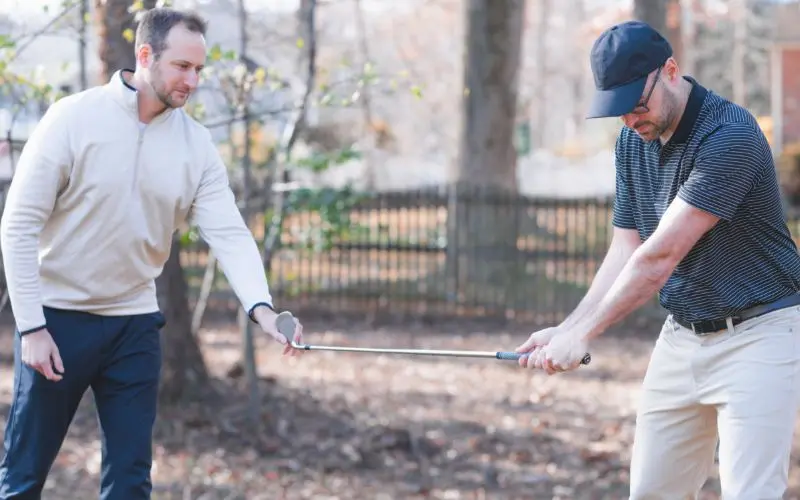
A TPI golf screening is a physical assessment, developed by the Titleist Performance Institute, that looks at how your body moves through the positions your golf swing actually demands. It’s not a swing lesson. It’s a way to find out whether your hips, spine, or shoulders are limiting your swing, or setting you up for injury, before either one becomes a bigger problem. For golfers playing courses around Reston, Sterling, Ashburn, and the rest of Northern Virginia, where the golf season runs long and courses like Reston National, Algonkian, and Trump National Golf Club see steady play from spring through fall, a screening like this can be the difference between a swing that holds up over a full season and one that breaks down by August.
How is a TPI screening different from a lesson with my golf pro?
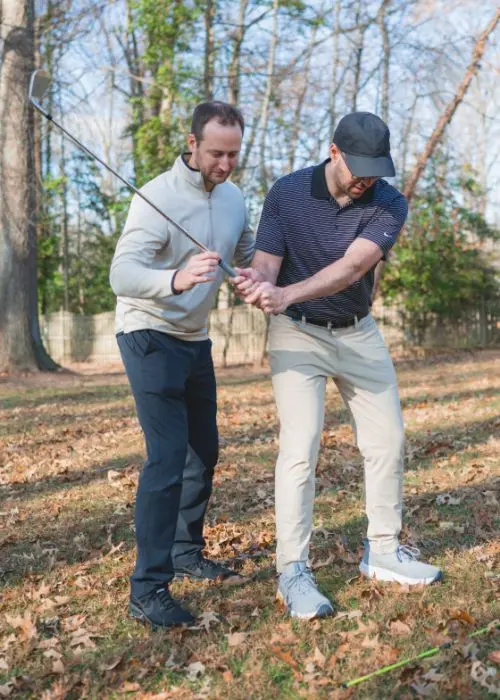
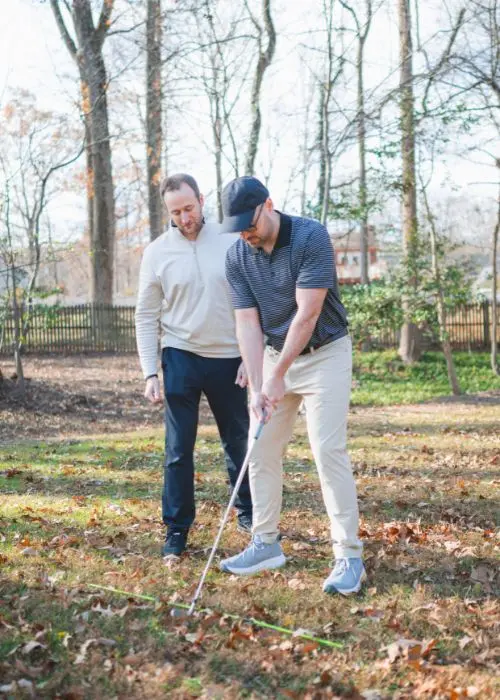
Your golf pro looks at your swing. A TPI-trained physical therapist looks at what your body is capable of doing in the first place. A lot of swing faults that pros try to coach out of you, like an early extension, a reverse spine angle, or a flat shoulder turn, aren’t actually swing problems. They’re the body compensating for a hip that doesn’t rotate enough, or a thoracic spine that’s too stiff to turn properly. You can take lessons for years and never fix something like that, because it isn’t a technique issue. It’s a mobility or stability issue, and that’s exactly what a TPI screening is built to find.
What does a TPI golf screening actually check?
The screening runs through a series of tests that map to specific parts of the swing: hip rotation and dissociation, thoracic spine mobility, single leg stability and balance, shoulder mobility, and core stability among them. Each test result gets tied back to a common swing fault, so if your hips don’t rotate well, the screening will flag exactly which swing characteristics that’s likely causing. It’s a fairly quick process, usually well under an hour, and at the end you get a clear picture of what’s limiting you physically, not just a general “your swing needs work.”
Why do so many golfers end up with back pain?
The golf swing asks a lot of your spine. You’re rotating forcefully, over and over, often from a hip that isn’t moving as freely as it should. When the hips can’t rotate enough, the lower back picks up the slack, and it does that hundreds of times over eighteen holes. That’s a big part of why low back pain is one of the most common complaints among golfers of every skill level, from weekend players at Algonkian to low handicappers who play several times a week. A TPI screening will usually catch this early, showing exactly where the hip mobility is falling short before it turns into a chronic back issue.
Who should get a TPI screening?
You don’t need to be scratch golfer for this to be worth doing. It’s useful for:
- Golfers dealing with recurring back, hip, or shoulder pain, especially the kind that shows up the day after a round rather than during it
- Anyone who’s plateaued on their handicap despite regular lessons
- Golfers coming back from an injury who want to make sure their swing isn’t rebuilding old compensations
- Players heading into a long Northern Virginia season who want to stay ahead of problems instead of reacting to them once they show up
What happens after the screening?
If the screening finds limitations, whether that’s tight hips, a stiff thoracic spine, or poor single leg balance, treatment is built around fixing that specific limitation rather than a generic golf fitness program. That might mean targeted mobility work, strength training for stability through the swing, or a combination of both, depending on what’s actually holding your body back. Because Active Health Solutions provides in-home and mobile care, this can happen at your house, a local range, or even at your course, without adding another drive across Northern Virginia traffic to your week.
FAQ
What is a TPI golf screening?
It’s a physical assessment developed by the Titleist Performance Institute that evaluates hip rotation, spine mobility, shoulder mobility, and stability to identify what’s physically limiting a golfer’s swing or contributing to injury risk.
Is a TPI screening the same as a golf lesson?
No. A golf lesson focuses on swing mechanics and technique. A TPI screening focuses on the body’s physical capacity to perform the swing, which often explains swing faults that coaching alone can’t fix.
Why do golfers get lower back pain?
Limited hip rotation is a common cause. When the hips can’t rotate enough during the swing, the lower back compensates repeatedly over the course of a round, which over time contributes to chronic back pain.
Do I need to be an advanced golfer to benefit from a TPI screening?
No. Golfers at any skill level, including those with recurring pain, a plateaued handicap, or recovery from injury, can benefit from identifying physical limitations affecting their swing.
Does Active Health Solutions offer TPI golf screenings in Northern Virginia?
Get a TPI golf screening in Northern Virginia
If your swing has plateaued or you’re dealing with pain that shows up after a round, a TPI golf screening can pinpoint exactly what’s limiting you. Active Health Solutions provides in-home and on-course screenings throughout Northern Virginia. Visit dcactivehealth.com or call (703) 637-9500 to schedule.