

Physical Therapy for ACL Tears: Recovery Timeline & Exercises
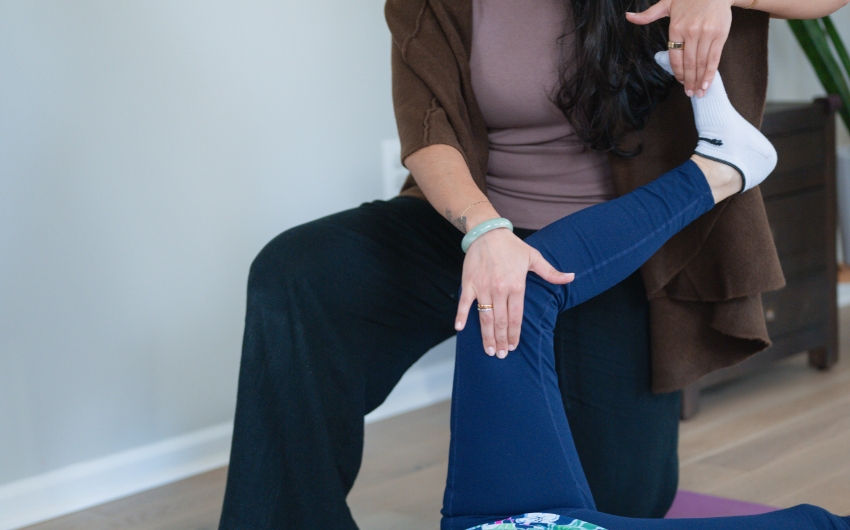
ACL recovery typically takes 6 to 12 months with physical therapy, with most athletes returning to sport around 9 months post-injury. However, your specific timeline depends on injury severity, surgical approach, and how consistently you engage in physical therapy. The good news? Physical therapy after an ACL tear has a success rate of 80 to 90% in returning athletes to their pre-injury level.
If you’ve recently torn your ACL in Arlington, Bethesda, or throughout the DC and Northern Virginia area, understanding what to expect from your recovery journey can help you stay motivated and realistic about your progress.
What Is an ACL Tear and Why Does Recovery Take So Long?
Your anterior cruciate ligament (ACL) is one of four major ligaments in your knee that provides stability during rotational movements, jumping, and rapid deceleration. When you tear your ACL, whether from a sudden direction change, awkward landing, or direct contact, that ligament can’t heal on its own. It requires either surgical reconstruction or conservative physical therapy management.
The recovery timeline is lengthy compared to, say, a muscle strain, because ligaments heal slowly. They have limited blood supply, so rebuilding takes months. Your quadriceps and hamstrings atrophy significantly after injury and surgery, so regaining strength takes considerable time. Your knee’s ability to sense position in space (proprioception) is compromised and requires retraining. You can’t simply push through progressive loading without risking re-injury. Each of these factors adds weeks or months to your total recovery.
ACL Recovery Timeline: What to Expect at Each Phase
Physical therapy for ACL recovery follows distinct phases. Here’s what typically happens as you progress through your rehabilitation.
Phase 1: Protection & Initial Recovery (Weeks 0 to 6 Post-Injury or Post-Surgery)
Your primary goal in the first 6 weeks is to reduce swelling, regain basic knee motion, and protect the healing ligament. This might not sound exciting, but it’s crucial. You’ll likely spend time on ice, elevation, and compression to manage inflammation. Isometric exercises like quad sets and glute sets help activate muscles without moving the knee joint. Your physical therapist will guide you through passive and active-assisted range of motion exercises. Most patients use crutches or a cane for the first 1 to 2 weeks after surgery and gradually progress to walking without assistance.
You’ll attend physical therapy 2 to 3 times per week during this phase. Your knee will feel stiff and weak. This is completely normal and nothing to panic about. You’re protecting the surgical graft and establishing the foundation for everything that comes next.
Phase 2: Early Strength & Mobility (Weeks 6 to 12)
Once your swelling is under control and you have some basic motion back, phase 2 focuses on restoring full range of motion and building foundational strength. You’ll progress through straight leg raises to activate your quadriceps, then move to wall squats with gradually increasing depth. Hamstring curls and bridges come next, followed by calf raises for ankle and knee stability. Balance exercises on both legs transition to single-leg stance, which is trickier than it sounds.
Around week 6 to 8, you’ll typically start a stationary bike at low resistance. The elliptical trainer often comes into play later in this phase for low-impact cardio. Your range of motion target is 0 to 120 degrees of knee bend, meaning full extension to a 120-degree bend.
Physical therapy frequency remains at 2 to 3 times per week. What you’ll notice is strength returning and swelling decreasing. Many patients express surprise at how weak they feel initially because ACL injuries involve significant quad inhibition, meaning your muscles literally forget how to fire properly.
Phase 3: Strengthening & Basic Movement (Weeks 12 to 20)
This is where serious strength building happens and you start introducing controlled movement patterns. You’ll progress from step squats to full body-weight squats. Lunges come in multiple directions: forward, reverse, and lateral. Step-ups and step-downs follow, along with single-leg balance activities on unstable surfaces. Resistance bands become part of your routine, especially for lateral band walks and monster walks (these look silly but they’re incredibly effective).
Light jogging progression usually starts on a treadmill around week 12 to 14, then moves to outdoor running if tolerated. Agility ladder drills start appearing in your workouts. By the end of this phase, your injured leg should be 80% or stronger than your uninjured leg when tested, though your physical therapist will need to verify this with specific strength testing.
Physical therapy frequency often reduces to 2 times per week during this phase as your independence increases. Mentally, this is where recovery becomes challenging. You feel stronger, but you’re still limited. Patience with progression is critical to avoid re-injury. Many athletes get ahead of themselves here and pay the price with setbacks.
Phase 4: Return to Sport & Advanced Training (Weeks 20 and Beyond)
Once you’ve built a solid strength foundation, phase 4 prepares you for sport-specific demands and gets you cleared for return-to-play. This is what you’ve been working toward. Advanced training includes plyometric exercises like jump training, lateral bounds, and cutting drills. If you’re a soccer player, you’ll work on dribbling and cutting. Basketball players focus on lateral movement and jumping. The common thread is that these are all sport-specific movements.
Agility and speed drills become increasingly important. Eccentric strengthening, where you emphasize the lowering phase of exercises, prepares your muscles for the demands of your sport. Balance work with eyes closed and on unstable surfaces challenges your proprioceptive system further.
Most PT protocols require you to pass specific tests before return-to-sport clearance. Single-leg hop tests should show at least 80% of your uninvolved leg’s performance. You’ll take a T-drill test measuring agility and a Y-Balance Test for dynamic balance. Sport-specific skill assessment ensures you can actually perform the movements your sport demands.
Timeline to full return typically runs 9 to 12 months, sometimes 12 to 18 months for high-level athletes competing at elite levels.
How Surgery Type Affects Recovery Timeline
Not all ACL reconstructions are the same, and your graft type affects your timeline.
If you had an autograft reconstruction using your own tissue (patellar tendon, hamstring, or quadriceps tendon), your recovery timeline is typically 9 to 12 months. Strength returns slowly initially, but long-term strength is excellent. Full intensity physical therapy usually resumes by month 6.
An allograft reconstruction using donor tissue takes slightly longer, usually 10 to 14 months, because the graft needs more time to be fully incorporated into your knee. Young, high-demand athletes sometimes have slightly higher re-injury rates with allografts, though this varies.
If you went the conservative, non-surgical route, recovery typically takes 3 to 6 months to return to daily activities. However, this approach isn’t recommended for athletes planning to return to cutting and pivoting sports, as the success rate in that athletic population is only 25 to 30%.
Your At-Home Physical Therapy Routine Between Sessions
This is where most people fall short. Physical therapists can guide you for one hour a few times per week, but you do the work at home. Patients who do exercises 5 to 7 days per week recover significantly faster than those who only attend sessions.
Sample Week 1-3 Home Exercise Routine
Once your initial swelling is controlled, you should be doing quad sets, 3 sets of 15 reps, twice daily. Add glute sets at 3 sets of 15 reps twice daily. Short arc quads can be 3 sets of 15 reps once daily. Straight leg raises are 3 sets of 10 reps, and heel slides for gentle range of motion work can be 3 sets of 15 reps. Prone hamstring curls come in at 3 sets of 10 reps once you tolerate them. This might sound like a lot, but most people can complete this routine in 15 to 20 minutes.
Sample Week 8-12 Home Routine
By week 8 to 12, your routine escalates. Wall squats become 3 sets of 15 reps, holding 3 seconds at the bottom. Single-leg stance, done near a wall for safety, can be 3 sets of 30 seconds. Step-ups on a 4-inch step are 3 sets of 12 reps. Lateral band walks with a resistance band become 3 sets of 12 reps in each direction. Your stationary bike should be 20 to 30 minutes daily at low resistance. Hamstring curls with a resistance band add up to 3 sets of 12 reps, and calf raises on both legs are 3 sets of 15 reps.
One practical tip: set a phone reminder for evening sessions if you struggle with consistency. Most athletes report that having a structured schedule significantly improves adherence to their home exercise program.
Return-to-Sport Considerations
Athletes often ask whether they can play at the same level they did before injury. The answer is usually yes, but with realistic expectations. About 90% of athletes successfully return to their sport with appropriate physical therapy and training. However, 6 to 12% re-injure the same knee. Early return before 6 months significantly increases re-injury risk by up to 5 to 6 times.
The safest approach is not to rush. Your PT should clear you based on objective testing (like those hop tests), not on how you feel. Feelings are subjective and misleading. Test results are objective and reliable.
Why In-Home Physical Therapy Works Well for ACL Recovery
For athletes in the DC, Arlington, and Northern Virginia area recovering from ACL tears, in-home physical therapy offers distinct advantages. There’s no transportation barrier, so you’re more likely to attend your 2 to 3 weekly sessions. Your physical therapist sees how you move in your actual environment, not just in a clinic. Sessions fit your life instead of the other way around, which is especially valuable if you’re balancing work, school, or other commitments. You recover in a familiar, private setting rather than a busy clinic. Your PT can easily adjust your home environment and exercise space based on what they observe.
Common Mistakes That Delay ACL Recovery
Returning to sport too early is the number one cause of re-injury. Don’t return based on how you feel. Wait for clearance from your physical therapist or physician. Many athletes think that surgery fixes the problem. Surgery reconstructs the ligament. Physical therapy restores function. Skipping PT after surgery is a setup for failure.
Another common mistake is neglecting the uninjured leg. Asymmetries increase re-injury risk, so maintain strength in your non-injured knee throughout recovery. Balance and proprioception work often gets skipped, but it’s critical for preventing re-injury. You can’t only train in straight lines when returning to sport. Cutting, pivoting, and lateral movement must be gradually introduced with guidance.
Some athletes avoid pain without reason. Soreness during rehabilitation is normal. Work through it rather than stopping, though you should distinguish between productive soreness and sharp, limiting pain.
People Also Ask: ACL Tear & Recovery Questions
How do you know if you tore your ACL or just sprained it? A true ACL tear usually involves a “pop” sensation, immediate instability, significant swelling within 2 hours, and difficulty bearing weight. A sprain is less severe. Only imaging, specifically an MRI, confirms a full tear. Seek evaluation from a physician or physical therapist.
Can you play sports again after ACL surgery? Yes. About 90% of athletes return to their pre-injury level with proper rehabilitation. The key is completing your full physical therapy protocol, which typically lasts 6 to 12 months.
What’s the difference between ACL reconstruction and repair? Reconstruction, which is most common, replaces the torn ligament with a graft. Repair, which is rare, reattaches the torn ends. Reconstruction has better long-term outcomes for athletes.
What does ACL physical therapy cost? Without insurance, a full 6 to 9 month course typically costs between 3,000 and 10,000 dollars, depending on frequency and location. Insurance usually covers 20 to 30 sessions annually. Ask your physical therapist about coverage specifics for your plan.
Can you prevent a future ACL tear? Partially. Neuromuscular training that focuses on balance, agility, and strength work reduces ACL re-injury risk by about 50%. Proper landing mechanics and adequate strength are protective factors.
Next Steps: Getting Started With ACL Recovery
If you’re recovering from an ACL tear in DC, Arlington, Bethesda, or Northern Virginia, start by getting clearance from your physician to begin physical therapy. Find a PT who specializes in ACL recovery and ask about their return-to-sport protocols. Commit to the full timeline because recovery isn’t linear. Trust the process even when progress feels slow. Track your progress by keeping notes on strength improvements and milestones. Plan for return-to-sport testing and don’t return until you pass objective measures.
ACL recovery is a marathon, not a sprint. But with dedicated physical therapy, progressive exercise, and patience, you can return to the sports and activities you love.
Ready to start your ACL recovery journey? Contact Active Health Solutions for in-home physical therapy specialized in sports injury rehabilitation across DC, Arlington, and Northern Virginia.
This article is for educational purposes and should not replace professional medical advice. Always consult with your physician or physical therapist before beginning any rehabilitation program.